







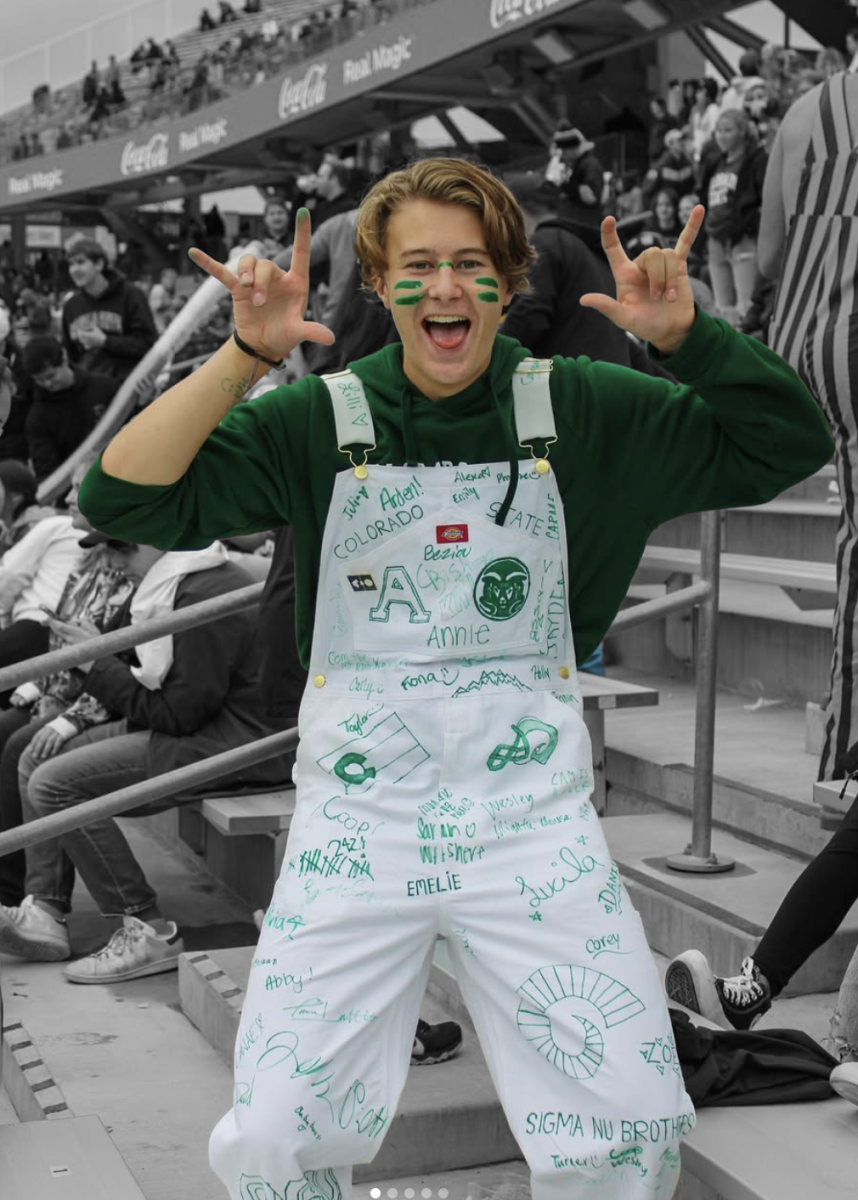
















When we hear the words fraternity or sorority, several images may come to mind. Stereotypically, we think of gym bros doing secret handshakes, gossiping valley girls in matching jackets, hazing rituals, Recruitment Week and – of course – raging parties.
What we don’t often think of, however, is gender inclusivity, especially not of the queer variety. But despite our preconceptions, people in the queer community can be very interested in Greek life.
The mission of a fraternity or sorority is to create a sense of siblinghood, and this emphasis on supporting and fostering found family is something that many queer individuals find appealing.
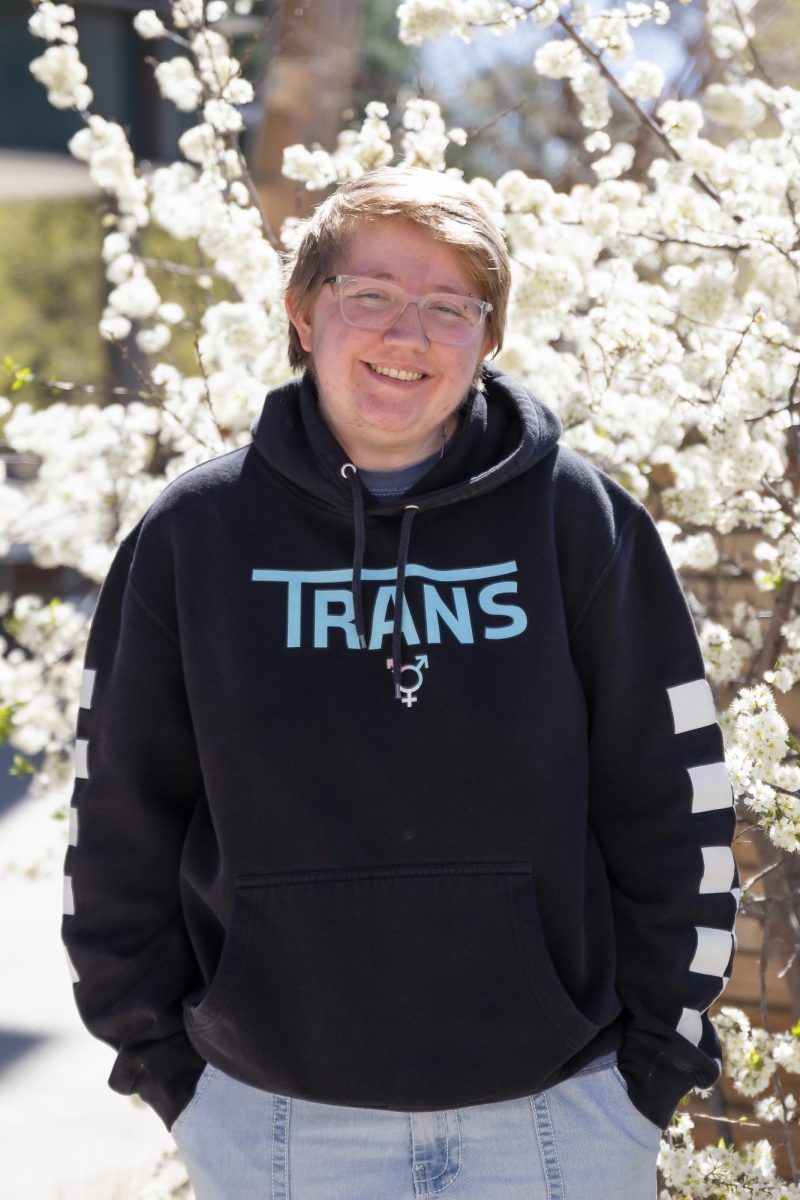
“When I first came to Colorado State University (CSU), that was something that I really wanted, was to join Greek Life, but it was really scary because I’m trans-masc,” Ethan McCue said. “I was pretty determined to find an organization that was going to accept me.”
Now a senior at CSU, McCue has been a member of Alpha Phi Omega for four years, and explained that joining a fraternity was something he aspired to do to express his identity.
“I came to college for the first time, like, using and introducing myself as Ethan … I just felt like something about saying that, like, I was in a brotherhood, that felt really gender-affirming to me, and I wanted to just find a space where I could safely explore that.” McCue said.
Though he had strong intentions, joining a fraternity was also somewhat daunting. McCue explained that as he looked for an organization, he was worried he wouldn’t find one that would accept him as a trans person.
“Like I said, it was kind of scary, I was looking at like the frats’ Instagrams, and I was kind of just like, seeing if there was any sign of somebody like me,” McCue said. “Any sort of notion that somebody queer could possibly be a part of these organizations.”
While Greek-letter organizations are not allowed to discriminate based on gender-identity, Greek Life’s relationship with gender inclusion is complex. Organizations generally strive to be inclusive, but the cultures within each organization can differ both in how much they prioritize it, and how outwardly they show it. This leads to transgender representation in Greek life tending to be sparse.
This lack of outward LGBTQ+ inclusion or mention of it made McCue feel apprehensive about approaching most fraternities, and this feeling even extended to the Office of Fraternity and Sorority Life.
“Honestly, I wish I had talked to them. I was just scared to go in there,” McCue said. “I wish that I … had somebody to talk to, to be like ‘hey, is this organization accepting?’”
After searching online, McCue said he stumbled across Alpha Phi Omega, an all-gender community service fraternity, largely by accident. Upon seeing that it was all-gender, McCue said he felt less anxious about approaching them, and decided to attend a recruitment event.
“I did get there, and like, I did see people like me, not overtly, but you can tell when you’re in a space with other queer people,” McCue said. “I feel really lucky, and like, really glad that I decided to take a chance, because it was one of the last recruitment events that they were doing.”
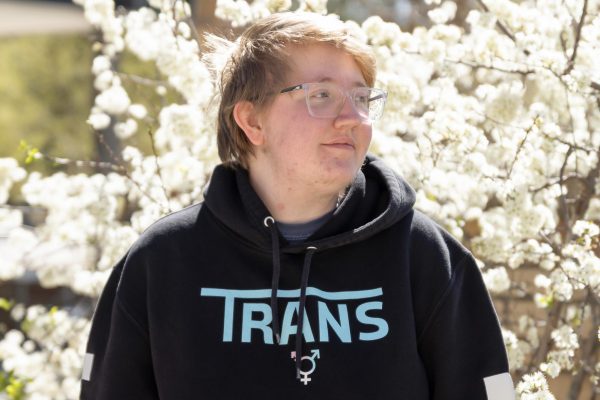
Since joining, McCue has held the roles of new-member educator, membership vice president, and currently, public relations coordinator, and described his experience as overwhelmingly positive.
“I would say, within Alpha Phi Omega, I was always treated with respect,” McCue said. “When I was a freshman, all of the seniors were super accepting and super kind to me, and I felt like I had a space.”
With Greek life as a whole, he said that his experience was also largely positive. If there was any apprehension towards him being trans, he said it was mostly from people who were not affiliated with Greek life.
“I’ve caught the most flack from other people that have no interest in Greek life … I would say that is something that has stayed really consistent,” McCue said. “Overall, people that I’ve interacted with in the Greek space have been really kind, but people outside of it really don’t understand why I would want to be a part of it.”
McCue noted, however, that his experience still hasn’t been totally perfect. Toxic masculinity and “frat culture” were aspects he identified as things that might have contributed to organizations not being outwardly inclusive.
“I think that there is a certain amount of, like, upholding of a gender binary that traditional organizations do,” McCue said. “To admit that you accept people that maybe are gender diverse, might not be upholding that ‘standard.’”
With this in mind, as public relations coordinator, McCue tries to show that Alpha Phi Omega is openly accepting of LGBTQ+ applicants.
“When we table on the plaza, I always look for pins, and I try so hard to make sure people get to feel like if they want to be in Greek life, that there is a space for them.” McCue said.
Outward support of queer applicants was something he found to be effective in increasing the amount of representation in his organization, and was something he recommended other Greek organizations, as well as the Office of Fraternity and Sorority Life, should pursue more.
“I do think that some of the more traditional fraternities and sororities could do a better job just saying ‘there is a space here for everybody,’” McCue said, specifying that signs and social media posts about queer inclusivity could be a good place to start.
According to him, gender inclusivity was, in fact, very present throughout his experience in Greek life. “I just wish they were louder about it,” McCue said.