
























What’s so controversial about words like “women,” “equality,” “race,” or even “green”? And why would the federal government be inclined to include these, and a swath of others, on a list of federally banned words? What implications does this have on higher institutions like universities, and what does it mean for words to be federally banned in practice?
It has long been known from ancient to modern societies that language is extremely influential and it has the power to shape worldviews and perceptions. As the German philosopher Ludwig Wittgenstein put it, “The limits of my language mean the limits of my world.” So what does it mean when government entities are the ones limiting and regulating the language that may be used in academic contexts?
On his first day in office, President Donald Trump signed an executive order titled, “Restoring Freedom of Speech and Ending Federal Censorship.” Section one of the executive order explicitly states that “government censorship of speech is intolerable in a free society.” That rings true on many levels, yet a growing list of banned words by the federal government is still underway. The words included on the list are silently being scrubbed and removed from government websites and documents. These words are an attempt from the Trump administration to erase mentions of what they call “illegal DEI” practices along with mentions of climate change, vaccines, and a myriad of other topics deemed unnecessary to mention or research.
Specifically, on college campuses and higher learning institutions, the language banned within these lists is necessary for research and the beneficence of human knowledge and progress. Federal bans, and most importantly, bans against particular facets of language, cannot force individuals nor universities to completely remove them from their vocabulary. But what it can do is threaten the federal funding allotted to these institutions and even negate research proposals that include said language.
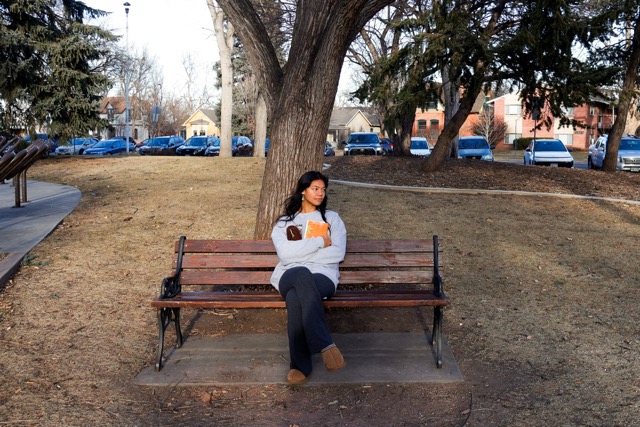
Dr. Anna Mikkelborg, an assistant professor of political science at CSU, had a portion of her PhD work sponsored by the National Science Foundation (NSF) in 2018. In 2025, the NSF updated their statement of priorities, stating that funded research “should not prefer some groups at the expense of others or directly/indirectly exclude individuals or groups. Research projects with more narrow impact limited to subgroups of people based on protected class or characteristics do not effectuate NSF priorities.”
“Given my focus on identity politics, it is impossible to describe much of my work without using words that are currently being used to flag grants for further scrutiny on this basis. The project for which I received an NSF fellowship in 2018 would almost certainly not be funded today.” Mikkelborg shared.
Because words related to race, identity, and even environmental realities began to be flagged for review in 2025, researchers have attempted to find ways to describe their work without using “banned” words. And for some, like Dr. Mikkelborg, whose work specifically calls on issues of identity and race, avoiding this language is nearly impossible. Instead, they have turned to private organizations to find necessary research funding. For example, in the past year, the American Political Science Association has received a record high number of grant applications without seeing any increase in their funding.
“This moment is a difficult one, and disproportionately so for researchers with limited alternative funding opportunities and those who are just beginning their careers,” Mikkelbord said.
As for universities, the federal government is unable to outright ban universities and individual researchers from using these words, but it can punish them by withholding or revoking federal funding. CSU’s budget depends on hundreds of millions of dollars of federal funding, creating a tension between attempting to support academic freedom while also keeping the lights on.
Now there exists a congestion between “students’ right to learn about topics of scientific, social, and cultural importance as well as researchers’ right to investigate these topics—and this new, really significant threat to the economic wellbeing of their institutions,” Mikkleborg offered.
Censoring research and academic language while simultaneously declaring to end censorship and restore freedom of speech to the country is a complicated web to spin. And universities are in different situations to navigate the tension. Institutions with significant private endowments are in stronger positions to resist these regulations in more visible ways, while universities with fewer private funding sources have fewer options to push back against demands. In relation to research, “universities can work with scholars to pursue alternative funding sources and update their merit and tenure review procedures to account for the increased difficulty of obtaining federal grants,” Mikkelbord said.
As the reality of what these federal bans on language may look like in universities and government agencies unfolds, Dr. Mikkleborg offers that “nevertheless, scholarly research on questions related to race, ethnicity, gender, sexuality, and climate change (and the list goes on) will continue on.”