














When Fort Collins was founded in 1864 as a military camp near the Cache la Poudre River, beer wasn’t part of the picture. The settlers who came later built a community focused on morality, with rules banning gambling and liquor that predated prohibition.
As it turned out, Fort Collins was positioned in an ideal landscape for beer production. The Cache la Poudre River provided mineral-rich water from the Rockies, and the nearby plains produced an abundance of barley and wheat. But despite the accessibility, brewing still wasn’t allowed in the city.
By 1896, Larimer County had established prohibition for nearly twenty years before the nation would. Even after it ended in 1933, Fort Collins remained a dry city for decades. Only 3.2% beer (low in alcohol content) could be sold in venues.
When prohibition ended, Fort Collins maintained strict guidelines around alcohol. The city was known more for its university and farms than for nightlife, and it wasn’t until 1969 that Fort Collins authorized alcohol sales. It was many years before Fort Collins would expand into the beer market, thanks to a culmination of entrepreneurial ventures that created the vibrant brewing landscape we see today.
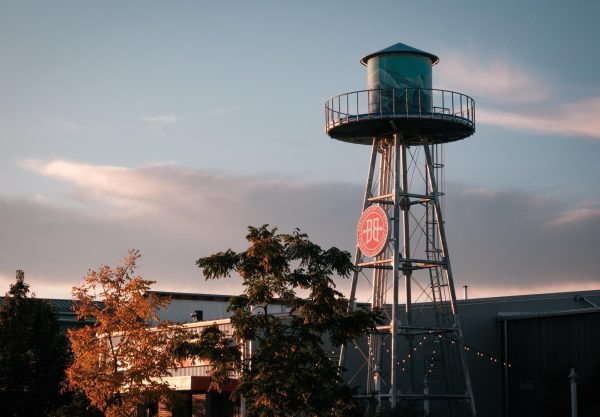
By the mid-1980s, attitudes around alcohol in Fort Collins were beginning to shift away from their long-held conservatism. In 1988, when Anheuser-Busch opened a large production facility in the northern part of town, Fort Collins saw a spike in employment and increased tax revenue. That same year, Coopersmith’s Pub & Brewing opened in the heart of Old Town. Coopersmith’s introduced something new: beer made right where it was served.
In 1991, another brewing dream was conceived. In a basement on the west side of Fort Collins, Jeff Lebesch and Kim Jordan began making Belgian-style ales.Their small operation would become the city’s famous New Belgium Brewing Company. One of their early creations, a malty amber ale called Fat Tire, would become one of the most popular craft beers in the country.
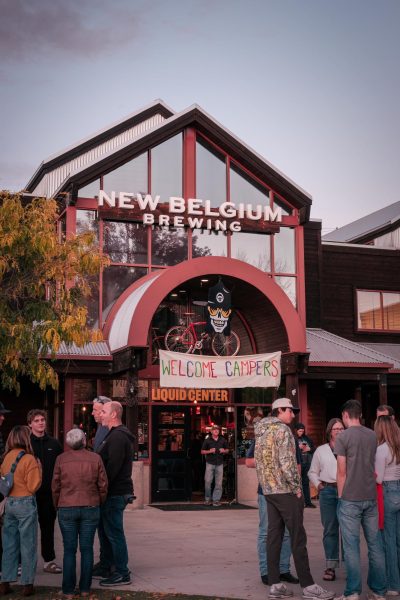
By the late 1990s, more local breweries appeared, the larger of which attracted tourists and national attention. People traveled to Fort Collins to enjoy an IPA in a downtown bar or relax with a barrel-aged saison in a quiet spot in the River District.
Two decades later, beer tourism was contributing hundreds of millions of dollars annually to the local economy. However, the industry faced new challenges. The sale of New Belgium to Japan’s Kirin Holdings in 2019 marked the end of its employee ownership. Rising costs and increased competition around seltzers and canned cocktails forced smaller breweries to adapt to the new economic landscape.
Another large organizational change came with Fort Collins’ push for sustainable business, New Belgium was one of the first breweries in the United States to power its operations entirely with wind energy. The company also pioneered wastewater recovery systems and community ownership through an employee stock ownership plan, making it fully employee-owned by 2013.
The beer industry in Fort Collins has always been about more than just beer. It’s about bringing people together, evident through families sharing meals at Coopersmith’s, cyclists enjoying a pint on New Belgium’s lawn, and especially in brewers exchanging taproom ideas.