













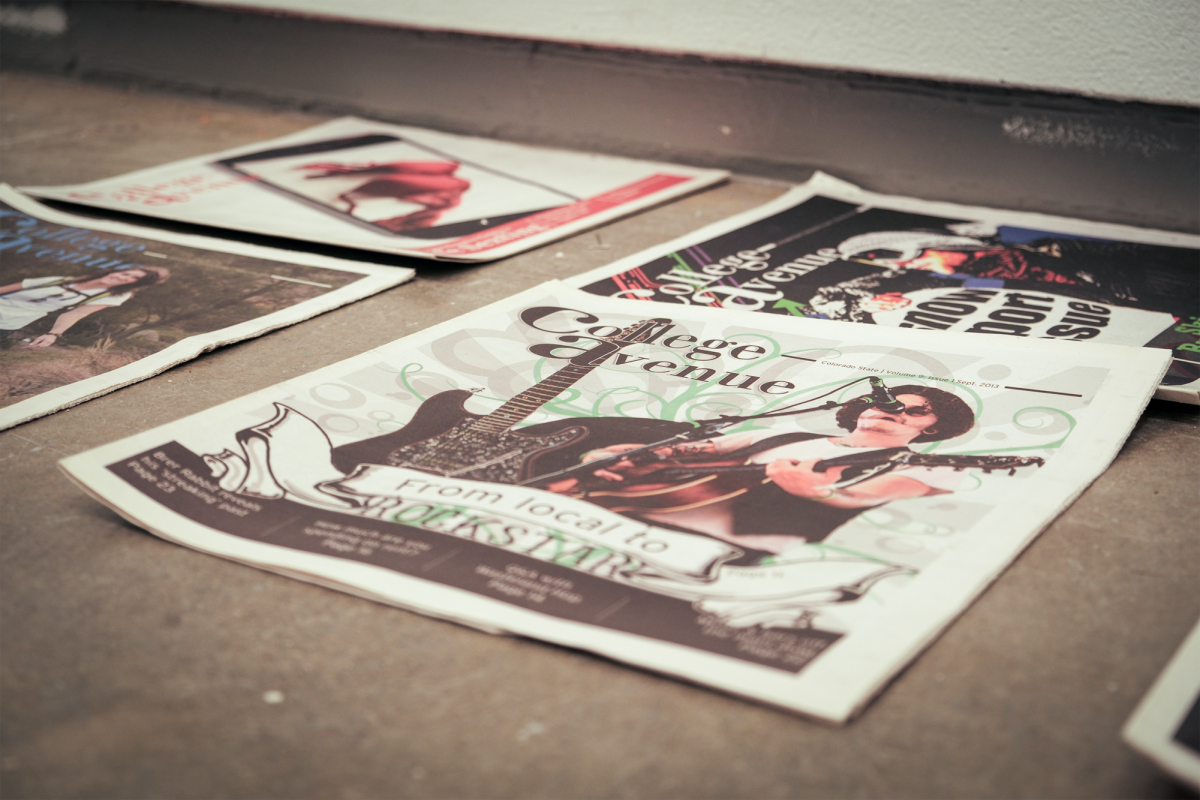
Over the last two decades, College Avenue Magazine (College Ave) has not been just a magazine, but has served as a mirror of Fort Collins’ culture and community. Through student features, food reviews, history deep dives, and so much more, these pages have captured the essence of the student body voice, leaving a legacy behind of stories, creativity, and an enduring connection with the community around us.
Up until 2004, Rocky Mountain Student Media Corp. (RMSMC) lacked an outlet for in-depth feature-length creativity. That was when Chris Ortiz, Nicole Davis, Katie Kelley, and Lisa Lueneberg took it upon themselves to fill this gap. The four of them took their idea to Jeff Brown, the newsroom advisor who would later go on to become the president of the organization. From there, the dream of producing a magazine publication within RMSMC became a tangible reality.
Katie Kelley, who had always been drawn to feature-length articles, was one of the founding members of College Ave and later became Editor-in-Chief of the publication. She had originally worked as a reporter for The Collegian but found that there was a gap between the RMSMC media outlets. “For me, at least, this was the perfect opportunity to expand upon our publication opportunities and help other journalism students broaden their horizons by creating a College Ave feature-type of magazine,” Kelley said.
After conceiving the idea of creating a magazine, the four of them went to work in hopes of turning this dream into a reality, something that students could be a part of for years to come.
Brown approached Jenny Fischer, who worked as the design and editorial advisor for RMSMC at the time, and asked to take on the role of College Ave’s first advisor. From there, Fischer started working with printers and getting bids, as well as collaborating with students on the design, style, and what the magazine was actually going to look like.
In total, this process took about six months. Between board meetings and sleepless nights in the Collegian office, the four of them were crafting something beautiful, something bigger than themselves, and something that would go on to serve and support students for decades to come.
When staff and faculty started to hear about the plan of producing yet another print publication, worries about the logistics and cost began to surface. “I remember being in a room with the board of both students, faculty, and extended staff members. We were kind of being grilled by them, but everyone ended up appreciating the initiative and the fact that we were trying to grow the journalism department even that much further to help students who maybe wouldn’t have been responsive to being a reporter for The Collegian. And this was just another avenue for them to extend their creativity,” Kelley said.
Once funds were secured and the logistical side of producing the publication was in order, the four founders began work on the prototype for the very first edition of the magazine.
The development of the magazine was strenuous for the original team. They regularly found themselves up against roadblocks that they were determined to plow through. “I remember there were nights where Lisa Lueneberg and I would actually sleep in the Collegian offices because we were trying to pull together the perfect College Ave edition. We were able to stay the nights in the offices and be creative; we would take naps, and then we’d get up and go to work on articles. Even though it doesn’t sound like a smooth process, it was a smooth process. Because we really fixed into one another, like Tetris, where our blocks fit together and we just melded, and we were able to be creative together.”
“We made a lot of mistakes, of course, but that’s the whole point. It was an opportunity to learn and grow as individuals in that type of realm,” Kelley shared.
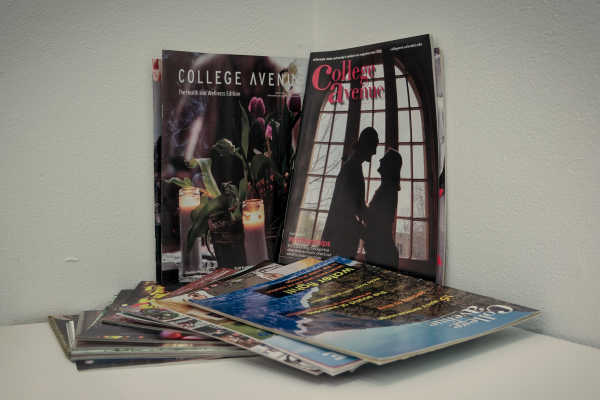
Now, College Ave is characterized by its themed editions that delve extensively into one specific topic or realm of thinking. However, the first few editions were not tied to any strict theme. Instead, the first printed edition of the magazine was 24 pages in length, and its central package was a story regarding academic freedom on CSU’s campus. The issue also included a story that explored the relationship between CSU and Coca-Cola, while another article investigated Adderall use among the student body.
“They really wanted to find stories that were relevant, things that were current, things that were currently happening. They also wanted to find stories that could be played in a magazine in a way that maybe they couldn’t play in The Collegian, on broadcast, or on radio,” Fischer said.
Those first editions laid the foundation for the stories that continue to be told in the magazine today. Each story served as a learning curve. Specifically, Fischer recalled in one of those first few editions, Amanda Shank and Chris Ortiz decided to report on the rise of Scientology, as it was frequently being reported on in the news at the time. Fischer gave it a read before approving it for publication, and it was off.
“Soon after it was published, both in print and on the website, I got a phone call from the Scientology communications coordinator who was based in Denver, basically reading me the story and saying how wrong we got things. I said, ‘You know, we did our research. We have an expert on the line, who’s directly quoted in the story and you know, I was, I was defending the story…And during a second conversation with her, she told me that she had reached out to the ethics chair for The Society of Professional Journalists in Colorado, who basically told her that ‘how dare I allow the students to publish that?’ And I was like ‘that person doesn’t know what they are talking about.’”
“We invited her to Fort Collins, and we sat and listened to her, and what it boiled down to was one sentence in the story that she didn’t like, in which Scientology was compared to a mob. And she was willing to let the rest of the story go. She was like, you’re right. You did your work. I understand it. But that was what she held onto, that one sentence, so I said, okay, we’ve heard you. We understand you, and we know you understand us. How do we make this right? And so we wound up giving the Scientology organization of Colorado a full-page ad in the next edition of College Ave.”
“It was really a lesson in the fact that everyone needs to be heard by enough people and for enough reasons. She just wanted to know for 100% certain that everyone involved understood her perspective, and we sure did,” Fischer said.
The stories in those first editions proved to be challenging, especially in finding the correct way to position the voice and style of College Ave as an individual and unique publication. Those original founders of the publication had to learn as the challenges presented themselves.
“Another challenge was trying to get content that was diverse. That was one of the biggest mistakes. I had my brother do an article, and it was an anti-Bush, anti-government piece, I believe. He went to a protest in D.C., but we didn’t have a counter on that. That was, to me, a huge learning experience. And now I’ve obviously learned since then, you can’t do one side of the story and not the other without putting the College Ave title at risk of saying it’s politicized this way or the other,” Kelley shared.
After the release of the first few publications, the editorial staff decided it was time to move the magazine in a new direction. That is when it “evolved into being themed; that was something that we understood would maybe be a little bit easier for the readers to understand. It worked better for advertising, and it also helped them dig in on one topic each time, which became beneficial for the team,” Fischer added.
Since the shift to themed editions, College Ave has investigated topics ranging from fashion and beauty to cannabis and sex. Each of these editions have played a significant role in shaping the image and style of College Ave as a publication.
Within the 20 years of the publication’s life, various themes have come and gone. Some have even been brought back to life and explored by completely new sets of staff with entirely different ideas on how to tackle these topics.
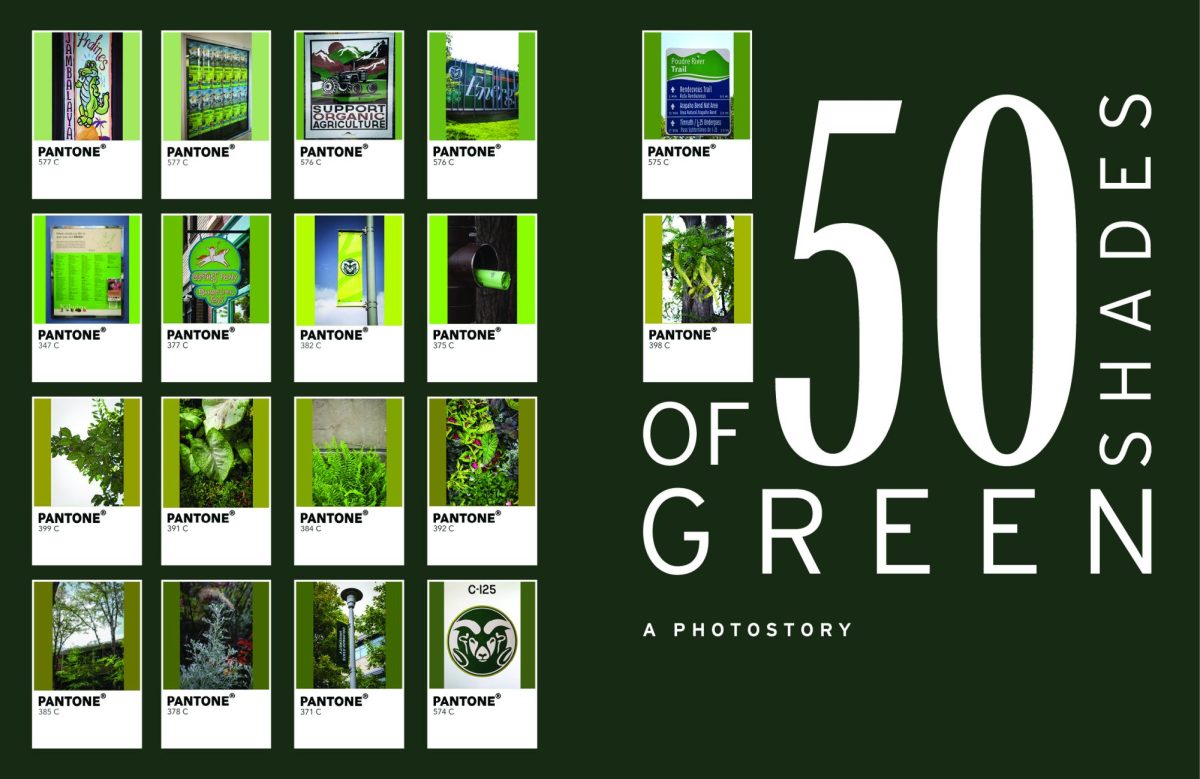
Coincidentally, the very first themed edition of College Ave was the same theme as the most recent publication, “The Green Edition.” During that year, CSU was beginning to gain more attention and recognition as a leading “green” university in the nation. 20 years later, the theme still stands as an engaging and relevant identity of the university, student body, and community.
Val Lucero, who at one point worked as the Editor-in-Chief of the magazine, decided to tackle the themes in a more conceptual way. “Her theme was sex, drugs, and rock and roll. And so they did the music edition first, and then sex, and then did drugs to wrap it up. Yeah, keep them guessing, but they were great. She was an incredible journalist.”
“They did not pull any punches with the sex edition; that cover was like this striking black and white photograph with the word “SEX” right in the middle, like four inches tall, bright red. I went to a conference that March, and I brought a handful of copies. I literally put them on the table, and someone I knew was right behind me, and she goes, ‘You’ve got to be kidding me.’ And I was like, ‘No, they did this. It’s great. It’s great. Pick one up. It’s awesome.’ But yeah, that one made a big splash,” Fischer said.
Without the dedication, creativity, and diligence of those original founders, College Ave would have failed to exist as a time capsule of the student body and community. After 20 years of the publication, it is easy for Kelley and Lueneberg’s sleepless nights in the Collegian basement to go unnoticed, or the panels of board members these determined students had to stand in front of and prove their idea to. And now, years later, countless students have worked their way into the core of this publication, meticulously threading the years all the way back to 2005, when the very first College Ave edition was published.
“That is a testament to the fact of what journalism is; you can’t stop reporting on the news that matters. We created something that has stood the test of time, and that, in and of itself, is a testament to the fact that students entering journalism school know and need to know that their profession and what they choose to do and what they write about is profoundly imperative to society today,” Kelley shared.
Every piece, every photo, and design that has gone into the past 20 years of this magazine has laid the foundation for it to continue to thrive in the future. Through College Ave’s countless obstacles, it has persevered as a symbol of the hard work of those that came before us. Through the years, the publication has provided generations of students the opportunity to grow their journalistic skills and confidence, all through a creative environment that was meticulously crafted with the dedication and heart of those original four students.