Editor’s note: This story features branches of Rocky Mountain Student Media, the non-profit company that houses student media at Colorado State University. College Avenue is also a part of RMSMC, but is not directly affiliated with CTV or KCSU in a promotional or editorial capacity. Adam Carlson guest wrote one article for College Avenue in 2025, but was not on staff.
With events like FocoMX, the biggest live music festival in Colorado, to the house show scene at venues like Sun Spot, to even the pianos placed about the city, Fort Collins is full of music. On Colorado State University’s campus, this culture is reflected through the relatively recent collaboration between the student-run radio station, KCSU, and broadcasting station, CTV, with their show “No Cover: Local Sessions,” giving local bands a place to become recognized.
While “Live and Local” was already a show KCSU hosted to spotlight local bands on their radio, Adam Carlson, CTV’s programming director for the 2025-26 academic year, wanted to create something both of the networks could collaborate on.
“They always wanted to make it a video podcast,” Carlson says. “They kind of did some rough concepts, and they turned out okay, but I knew I wanted to … kind of collab with it, because KCSU on its own didn’t have the resources to really fully pull it off.”
Combining CTV’s skills in video and KCSU’s audio work, “Live and Local” turned into “No Cover,” which not only captures the performances on video, but also records the audio to air over radio at a later date. Bands also get interviewed after their session, where they can share details about their work. The name is a reference to how there is no cover cost to listen to the concert.
-
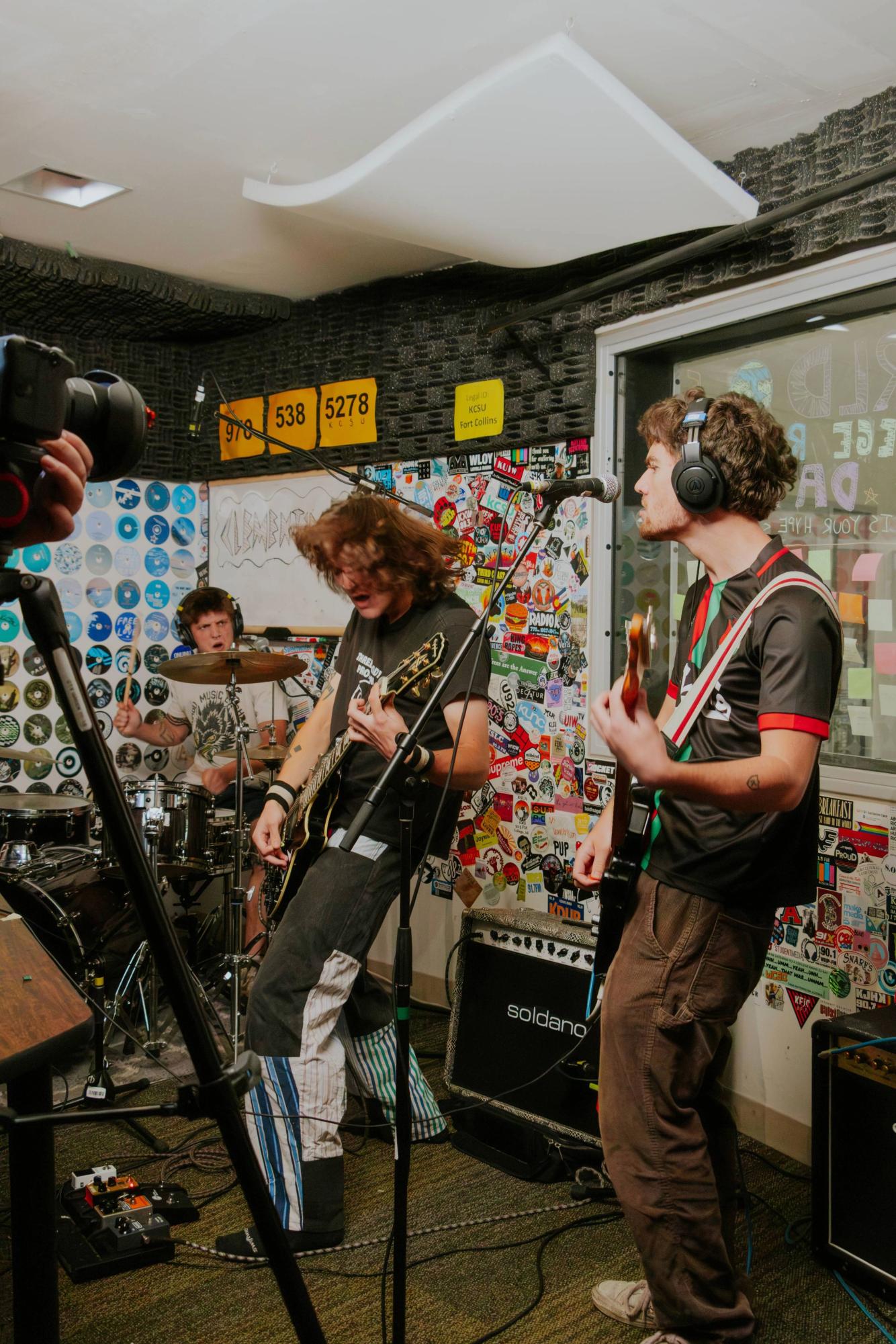
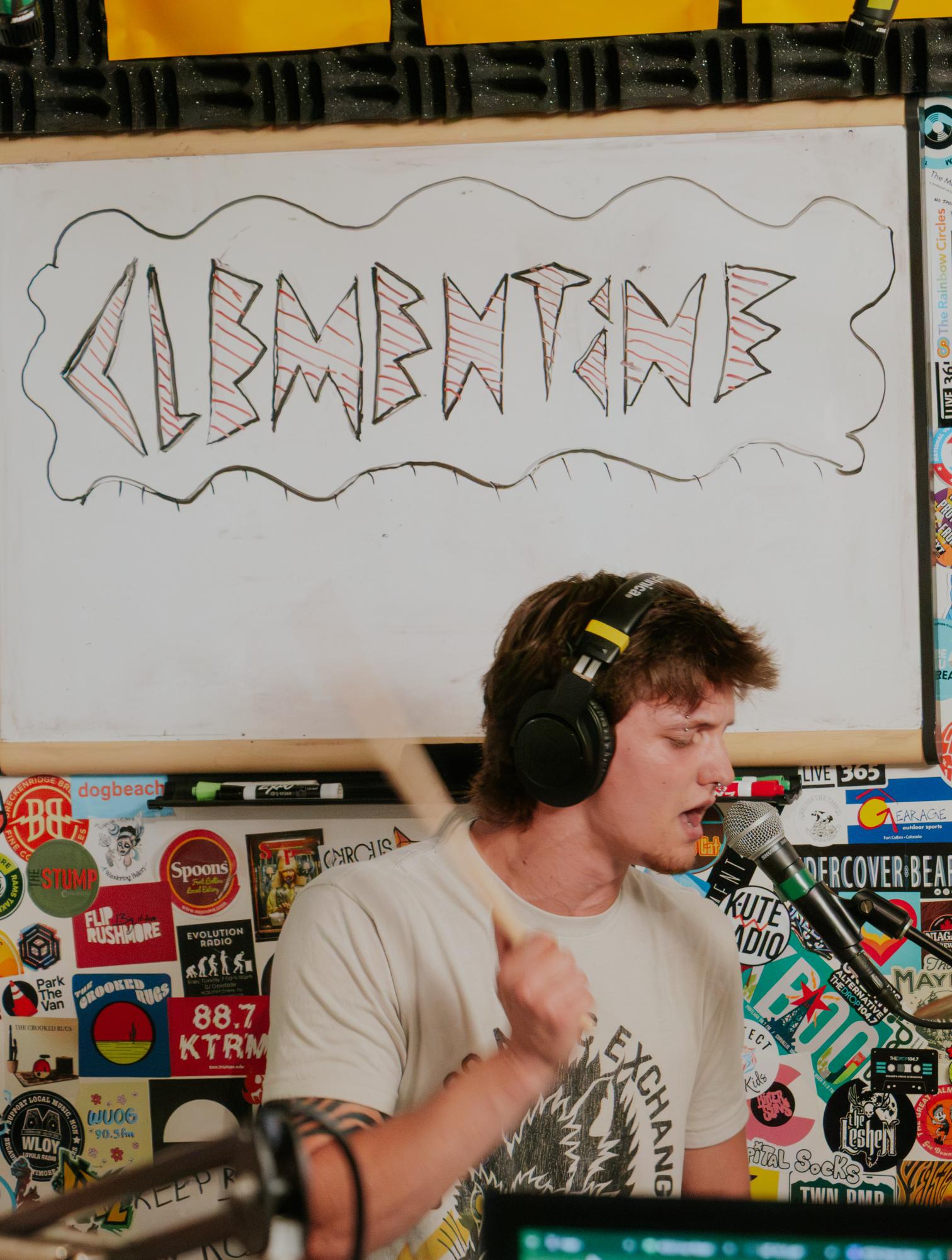
No Cover sessions take place in KCSU’s recording studio in the Lory Student Center. The band Clementine performs in the studio in Fort Collins, Colo., Oct. 4, 2026.
-
Clementine’s lead singer performs for No Cover, CTV and KCSU’s highlight of local bands in Fort Collins, Colo., Oct. 4, 2026.
-
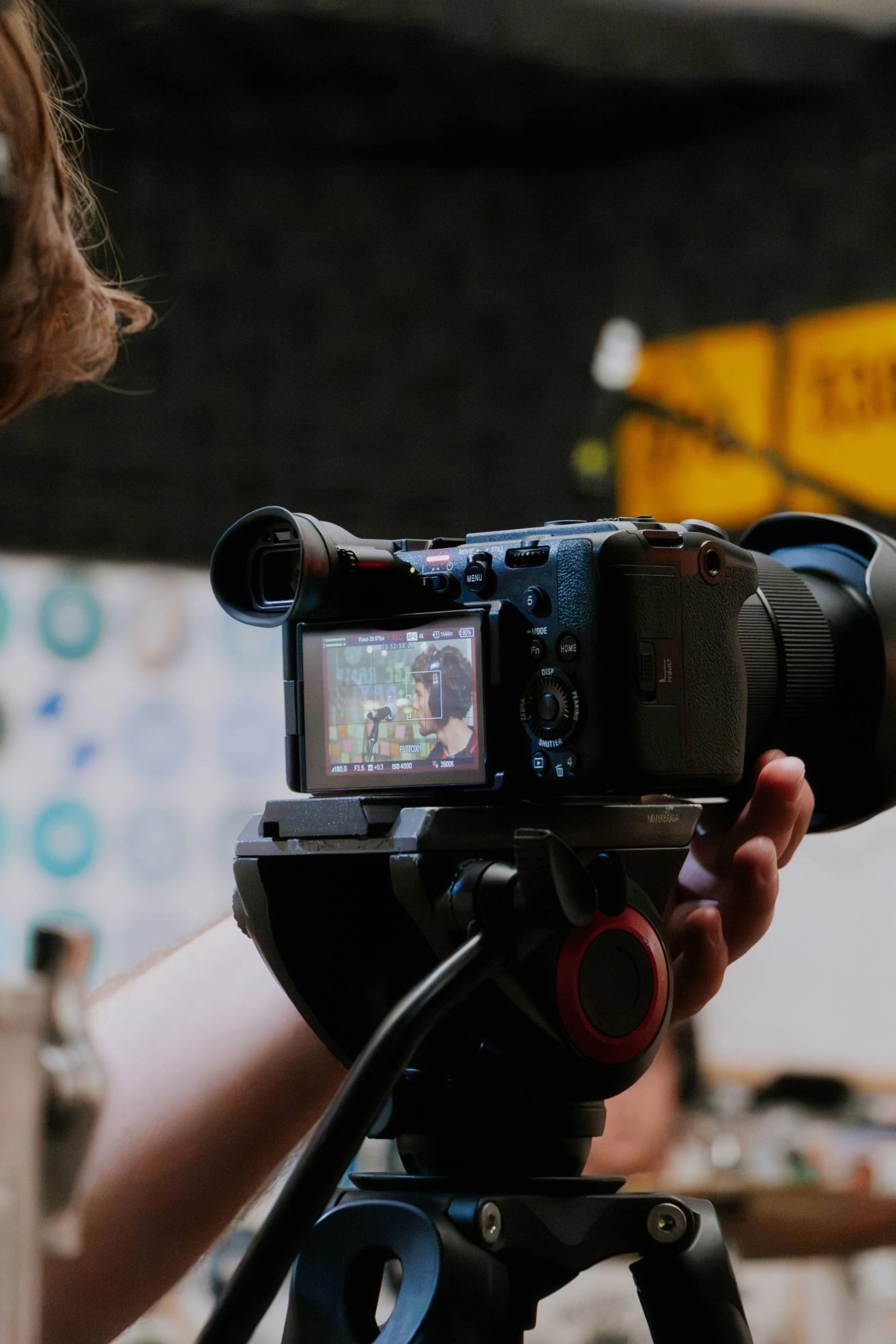
No Cover’s producer, Gus Arnold, films the session with Clementine in Fort Collins, Colo., Oct. 4, 2026.
-
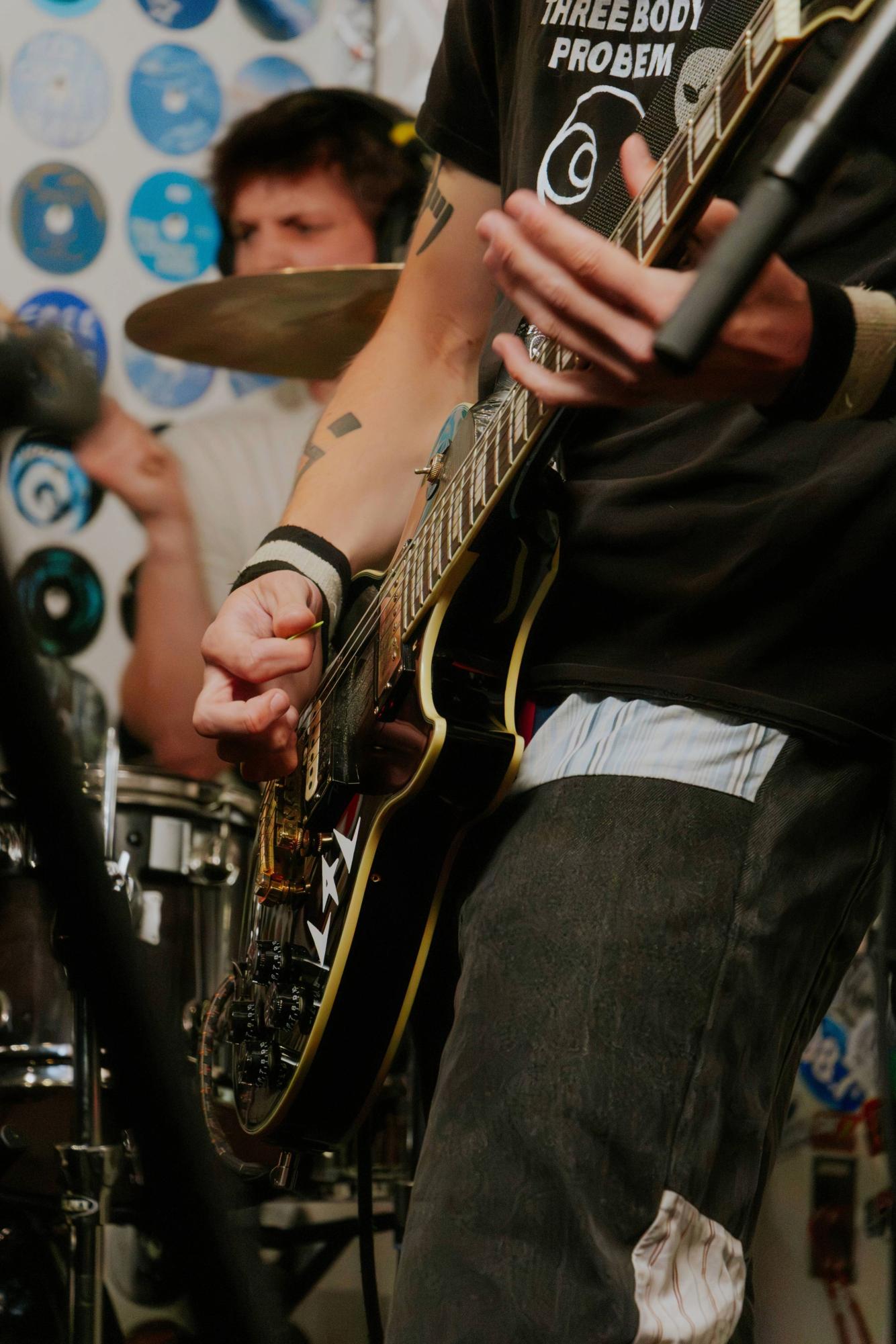
Clementine’s lead bass guitarist performing at No Cover’s session in Fort Collins, Colo., Oct. 4, 2026. No Cover highlights local bands of any genre to help them gain recognition.
-
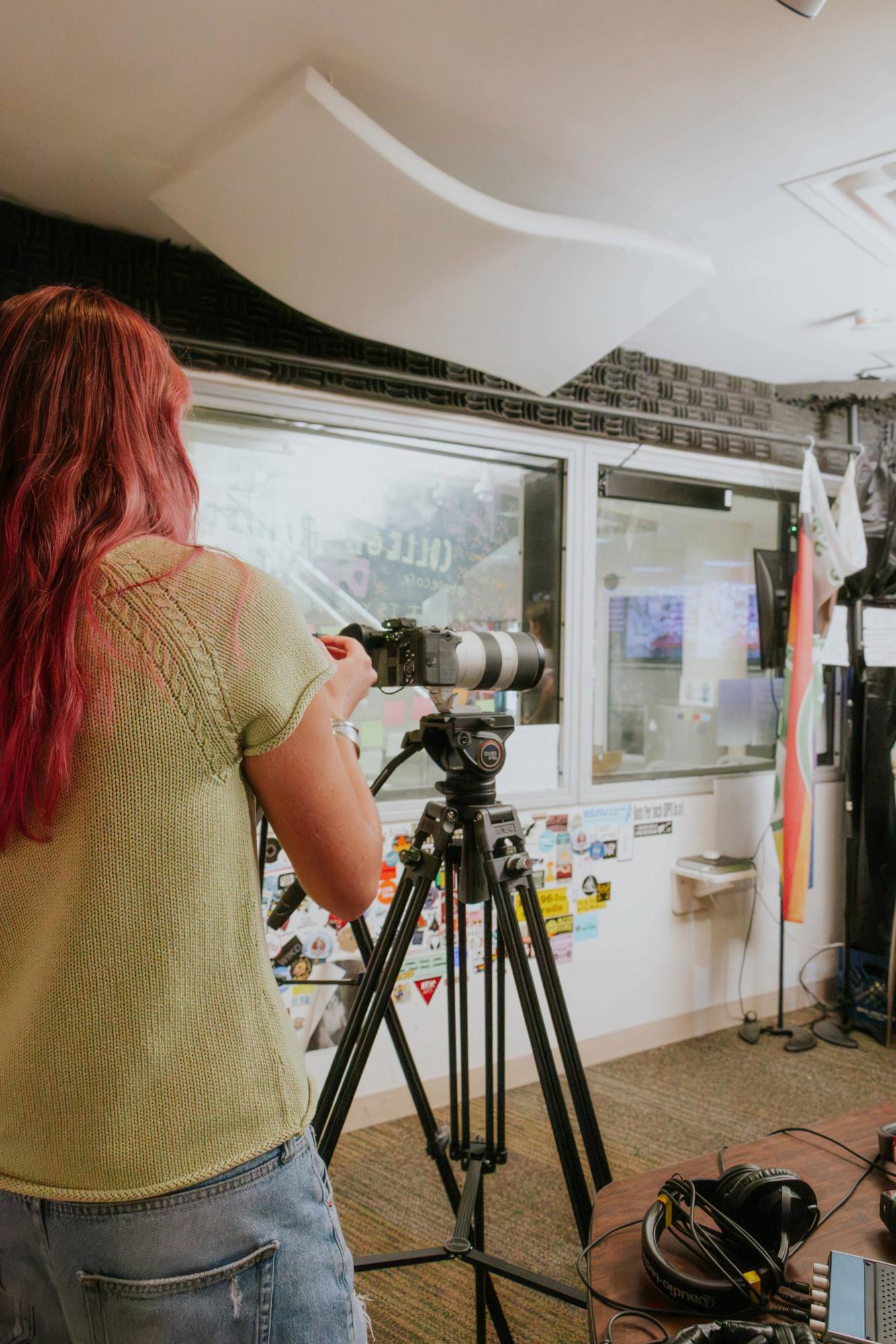
Aubree Wood, assistant producer for No Cover, films the interview between KCSU’s host and Clementine in Fort Collins, Colo., Oct. 4, 2026. Each No Cover session features multiple songs with interviews in between.
After Carlson graduated, Gus Arnold, who shadowed Carlson during his time there, became No Cover’s new producer.
“We showcase a lot of, like, college bands, but also just local bands that maybe are not extremely popular or are getting more popular,” Arnold says. “And just kind of giving them a platform to have a very highly produced live video of them and also an interview of them where they can explain about their band.”
Their music is also set in a collection that can be looked back on and listened to, and because it helps give local artists a recording platform, Carlson says he views No Cover as a kind of archive of bands that perform in Fort Collins.
“I just think it has a lot of potential to just continue and continue highlighting Fort Collins artists and elevate the scene and, you know, engage both KCSU and CTV in a really meaningful archive of what Fort Collins music scene is,” Carlson says.
Carlson explains that since many of these bands exist for a relatively short time, and might not have the same documentation of their existence, being an archive is an integral part of the show.
“I really do view it as it is an archive,” Carlson said. “You catch the bands when they perform, and they’ll change and they’ll shift. Some will fall off, some will blow up, but you know the show captures them exactly then, and I think that’s really special.”
Behind the scenes, No Cover consists of the KCSU local music director, audio engineer, videographer, producer and assistant producer. Often, the producer and assistant producer work together to operate cameras and edit the final cut, but they also take volunteers who can assist with filming.
The team is made up of students still learning how to produce the show, as well as people who have been working on it since it first aired. The team say it’s important that they have people shadow each role so that when someone graduates, No Cover can continue, both as a show and as an archive.
Ashley Crouch is KCSU’s local music director and interviews artists after the song portion of the show, and says she enjoys the opportunity to meet artists.
“It’s like Tiny Desk NPR style,” Crouch said. “I love Tiny Desk, and so I’m like, this is so cool that I get to … talk to these bands.”